
 365Crypto
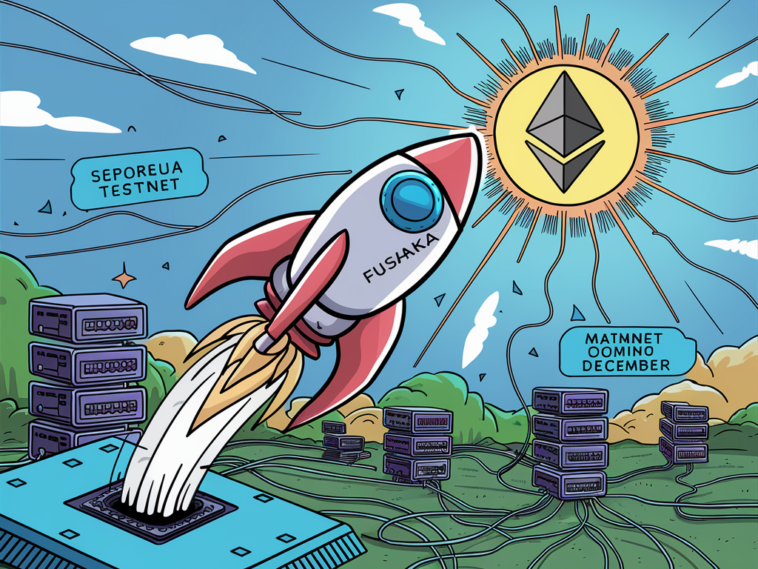
Ethereum’s Fusaka upgrade has officially gone live on the Sepolia testnet, marking another milestone in the network’s ongoing mission to boost speed and scalability.
What’s New in Fusaka
This is the second phase in Ethereum’s three-part rollout plan, following the Holesky activation earlier this month. Developers are now putting the network through a stress test — cranking up the block gas limit to 60 million and testing the brand-new PeerDAS system.
The goal? To make sure Ethereum can handle more complex smart contracts and heavier transaction loads without breaking a sweat.
Inside the Tech
According to Gabriel Trintinalia from Consensys, the client teams spent months making sure Ethereum’s nodes can manage the bigger block sizes without causing network instability.
That’s where Peer Data Availability Sampling (PeerDAS) comes in — it lets validators check small bits of data from different peers instead of downloading everything. That makes validation faster, lighter, and still decentralized.
(PeerDAS: a method that allows nodes to confirm transaction data without storing the full dataset.)
The Road to Mainnet
Ethereum’s final test for Fusaka happens on the Hoodi testnet later this month. If all goes well, the mainnet upgrade will roll out in December, following the successful Pectra and Dencun upgrades.
Those earlier upgrades slashed gas fees, boosted staking limits, and even allowed wallets to pay gas in tokens other than ETH. It’s all part of Ethereum’s long-term quest to become faster, cheaper, and more scalable for everyone in Web3.