
 365Crypto
Corporations Reenter the Crypto Market
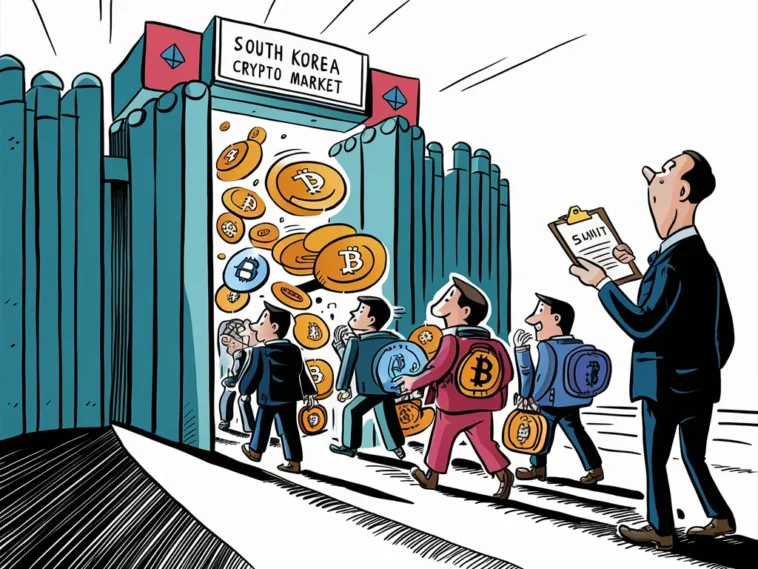
South Korea is reopening its crypto market to corporations after nine years on the sidelines.
The Financial Services Commission has introduced new rules that allow listed firms and professional investors to trade digital assets again. The ban, first imposed in 2017, is officially coming to an end.
Back then, regulators feared wild speculation. Retail traders were driving prices at record speed, and officials worried about money laundering and financial instability. So they shut the door on institutions and left retail investors inside the arena.¹
The New 5% Investment Limit
This time, the door opens slowly.
Corporate crypto investments are capped at 5% of a company’s annual equity capital.² The goal is simple: let firms participate, but stop them from betting the balance sheet on Bitcoin.
Companies can only buy the top 20 cryptocurrencies by market value on regulated domestic exchanges. That means major assets like Bitcoin and Ether make the list. Smaller tokens stay off the menu for now.
Exchanges must also manage large institutional orders with safeguards. Trade size limits and staggered execution aim to prevent sharp price swings.³
Part of a Bigger Digital Plan
This shift fits into a broader national strategy. South Korea wants to become a digital finance hub by 2026.
Lawmakers are preparing the Digital Asset Basic Act. The bill will unify crypto rules covering exchanges, custody, token issuance, and investor protection.⁴ Stablecoin regulation and possible spot crypto ETFs are also under review.
The message is clear. Crypto is no longer treated as a threat. It is now treated as a market that needs structure.
Market Impact: Slow but Meaningful
Institutional money could improve liquidity and market depth. Professional investors tend to use risk controls and longer time horizons. That may cool the retail-driven roller coaster.
Still, the 5% cap limits how much capital can enter at once. Corporate treasuries will not flood exchanges overnight.
South Korea is choosing caution over speed. Institutions are welcome back, but they must keep their seatbelts on.
¹ Money laundering: The process of hiding the origin of illegally obtained funds.
² Equity capital: The value of a company’s net assets after liabilities.
³ Staggered execution: Breaking large trades into smaller orders to reduce market impact.
⁴ Custody: Secure storage and management of digital assets on behalf of clients.