
 365Crypto
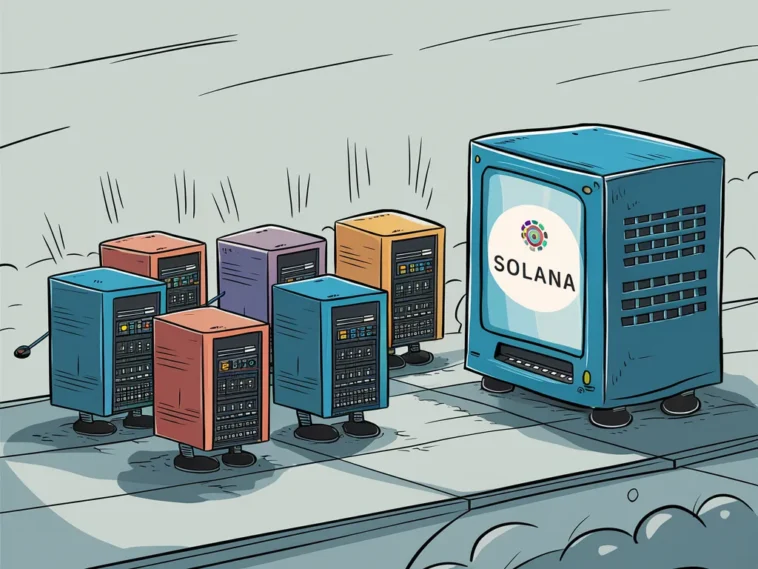
Validator numbers slide fast
Solana’s validator count has dropped hard over the past three years.
The network now runs with far fewer independent operators than before.
Data shows validator numbers fell from 2,560 in early 2023 to just 795 this week.
That is a 68% decline, and it has sparked concern across the ecosystem.
Validators keep the blockchain alive.
They confirm transactions and add new blocks to the ledger.
Small operators feel the pressure
Some inactive nodes were removed during cleanups.
But operators say that is only part of the story.
Running a validator has become expensive.
At the same time, large validators now offer zero fees to attract stake.
One independent operator said small validators are being priced out.
Supporting decentralization sounds noble, but bills still need paying.
Zero fees change the game
Large validators can afford to charge nothing.
Smaller players cannot compete without losing money.
This shifts power toward a few big operators.
Retail validators slowly disappear from the network.
That trend raises a clear question.
How decentralized is a blockchain if only giants can afford to run it?
Nakamoto Coefficient also drops
Solana’s Nakamoto Coefficient fell 35% over the same period.
It dropped from 31 to 20, showing rising concentration¹.
Validator costs have climbed alongside SOL’s price.
Operators now need large token holdings just to stay active.
Voting on blocks costs up to 1.1 SOL per day.
Over a year, that adds up fast for small validators².
Footnotes:
¹ Nakamoto Coefficient: The number of entities needed to control a network.
² Voting fees: Onchain costs validators pay to participate in consensus.