 365Crypto
SEC splits tokenized securities into two camps
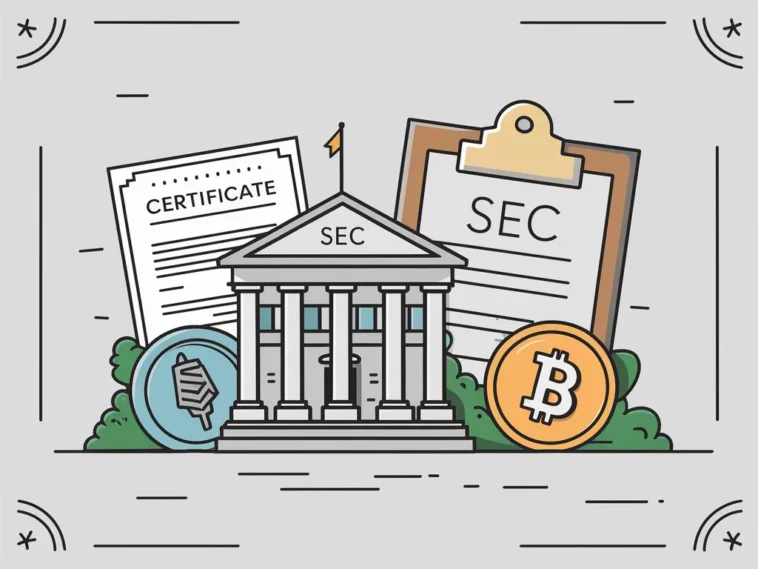
The US Securities and Exchange Commission released new guidance on tokenized securities.
It explains how these assets fit into existing securities law without changing the rules.
The agency says tokenized securities fall into two main categories.
They are either issued by the original company or created by outside third parties.
Blockchain does not replace legal obligations.
A security stays a security, even if it lives on a blockchain instead of paper records.
Issuers can tokenize their own assets
Companies can tokenize their own shares or bonds in two main ways.
One method records ownership directly on a blockchain ledger.
Another method issues a crypto token that updates ownership records offchain.
Both methods still require full compliance with US securities regulations.
The SEC made this point very clear.
Changing the technology does not change the law, even if the tech looks futuristic.
Third parties use custodial or synthetic models
Unrelated firms can also tokenize securities they do not issue.
The SEC groups these into custodial and synthetic models.
Custodial tokens represent indirect ownership.
The real assets stay with a licensed custodian, not the token holder.
Synthetic tokens work differently.
They give price exposure without actual ownership of the underlying security.
These structures often resemble financial products like swaps or structured notes¹.
Risks remain for investors
The SEC warned that third-party tokens add extra risk layers.
If the issuer fails, token holders may face losses.
Regulators still prefer broker-led custody over self-custody².
This matches the current US market structure.
The message is simple.
Blockchain is a tool, not a legal loophole.
Footnotes:
¹ Structured notes: Financial products that combine securities with derivatives.
² Self-custody: Holding assets directly without a broker or custodian.